
Research Interests
Our research thrusts are divided into three broad areas: dense plasmas, extreme fields and currents, and dynamic compression, in addition to science and technology research directed towards the goal of inertial fusion energy (IFE research). Our scientists lead and collaborate in experiments in these areas at LCLS and other facilities such as LaserNetUS labs or other XFELs.
Finite temperature plasmas at high density exhibit complex behavior, with long range interactions affecting properties such as atomic structure, transport, and equation of state. They exist in many systems of interest, such as stellar and large planetary interiors, astrophysical impacts, and inertial fusion implosions. Modeling of these conditions is difficult and calls for validation by precise experimental measurement. However, where these conditions can be generated in the lab their high density and pressure makes them opaque to visible light and highly transitory. Thus, the ultrafast, ultra-bright, tunable, hard X-rays of LCLS are an ideal tool for studying these states.
Our department develops methods of generating such plasma states and performing high-precision measurements of properties such as atomic structure, temperature, transport, and electric permittivity. The states can be generated by various irradiation and target schemes of the long or short pulse laser or with tightly focused X-rays. For measurements we employ spectroscopically and angularly resolved, elastic and inelastic, resonant and non-resonant X-ray scattering, and X-ray photo-pumping, coupled with high-power optical laser techniques, such as interferometry, ellipsometry, and THz generation and probing.
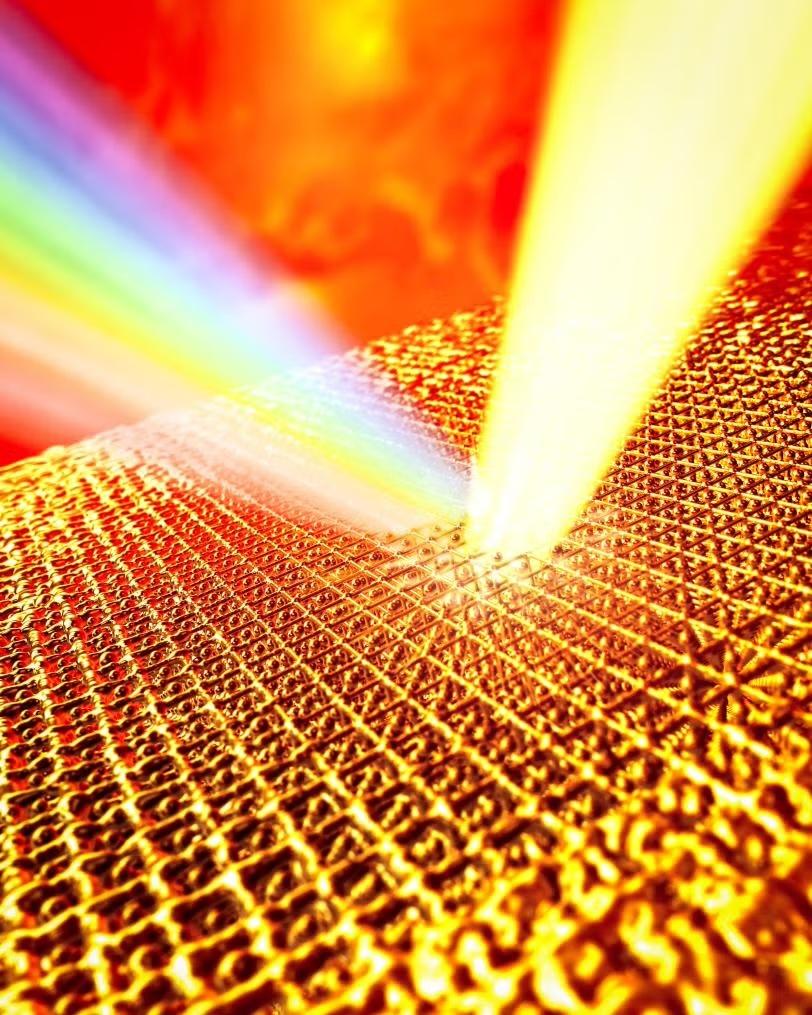
Modern terawatt and petawatt class lasers can be used to achieve light intensities well exceeding 1018W/cm2, which can ionize matter and drive huge currents of electrons to relativistic speeds on femtosecond timescales. The transport of these electrons through the dense material leads to complex effects, such as rapid heating, strong quasi-static fields, streaming instabilities, and particle acceleration. These interactions are relevant to the physical properties of extreme astrophysical phenomena, the rapid coupling of laser energy to matter to create dense plasma states, and the study of compact ion accelerators.
Hard X-ray XFELs provide unprecedented capabilities to probe bulk target material interacting with laser-driven relativistic electrons. We apply imaging and spectroscopy techniques to measure structural evolution, field strength, or energy partitioning within the target. These data can be used to validate hybrid PIC and magnetohydrodynamic codes, and improve understanding of the behavior of irradiated targets with various initial structures and irradiation parameters.
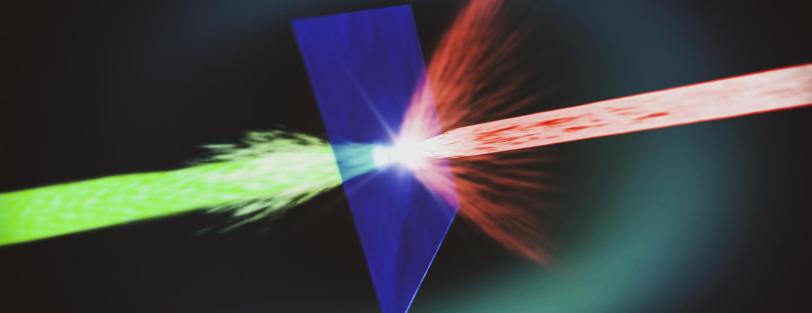
These experiments in their fullest will address a wide variety of topics in high‐pressure research including shocks , equations of state, shock induced chemical reactions, disorder (diffuse scattering), strength/kinetic issues, dislocation dynamics, coupling to large scale molecular dynamics (MD), high strain rate phenomena and shear modulus under compression, (phonon dispersion curves). The generic high pressure experiment has a long pulse laser focused to a target, to a spot size of 150 to 600 μm after having its wavefront smoothed with continuous phase plates. The rear of the target is diagnosed by the VISAR system, which measures the surface motion and the surface reflectivity. These diagnostics are complemented by the XUV spectrometer that measures the fluorescence induced by the LCLS.

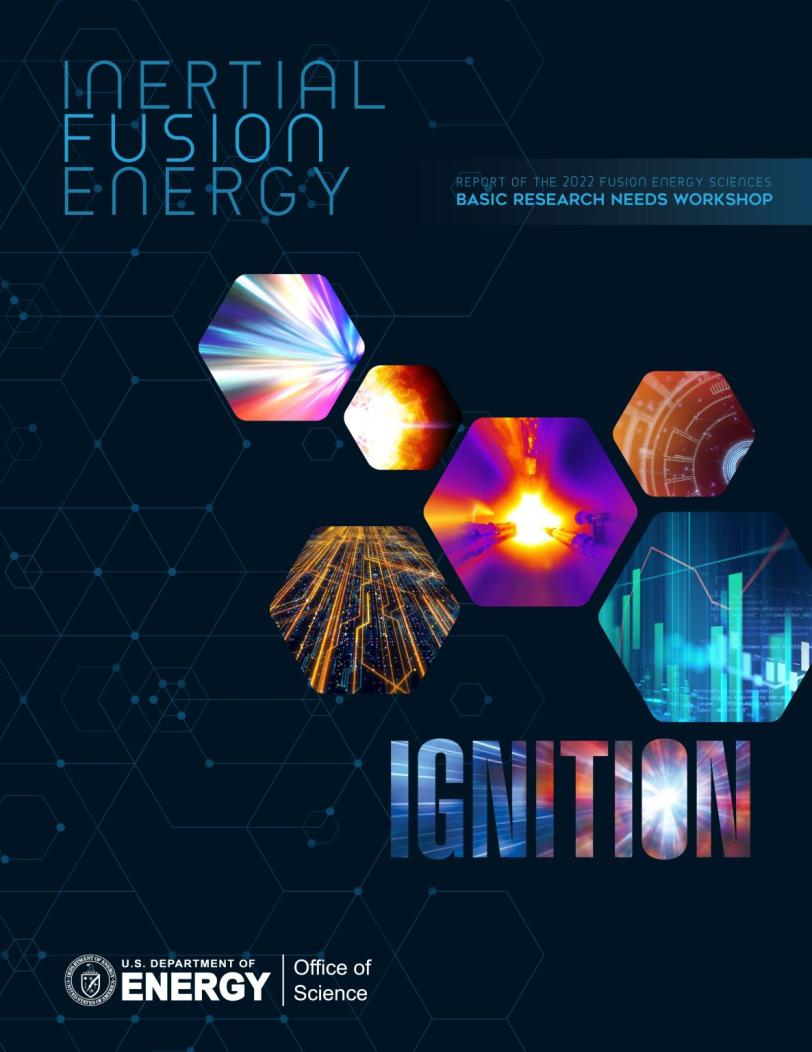
In the lead-up to and following the achievement of nuclear ignition at NIF, worldwide interest in inertial fusion as a viable path to fusion energy has surged. Scaling these results to a viable energy source will be a massive undertaking, requiring several developments in science and technology. Key priority research opportunities are outlined in the Inertial Fusion Energy Basic Research Needs (IFE BRN) report.
Working with the scientific community, especially through collaborative networks such as the IFE-STAR hubs and FIRE Collaboratives, our researchers are developing advanced techniques and capabilities to enable the precise study of IFE-relevant physics and technological solutions using the capabilities of LCLS. For example, advancements in high resolution, phase sensitive X-ray imaging can be applied to the study of fuel-wetted foams, which are part of a target concept for affordable high repetition rate fuel capsules.