SLAC National Accelerator Laboratory
LCLSLinac Coherent Light Source

User Portal Login   |  LCLS Internal Site

  • About
    • Learn about XFELs
    • Organizational Chart
    • People & Committees
      • Leadership
      • Users' Executive Committee
      • Scientific Advisory Committee
      • LCLS Detector Advisory Committee
      • Proposal Review Panel
      • SLAC Photon Science Faculty
      • Users' Recognition Award
      • Young Investigator Award
    • Strategic Plan 2023-2028
    • Our Science
    • Internships
      • Intern Testimonials
      • Summer Student Poster Sessions
    • Jobs
    • Multimedia
      • Virtual Tours
      • Fact Sheets & Infographics
      • Image Gallery
      • Youtube Videos
    • Coming to SLAC
    • Contact Us
  • User Resources
    • User Research Administration (URA) Office
    • Schedules
    • Proposals
      • Run 27 Proposal Call
      • Proposal Preparation Guidelines
      • MeV-UED Proposals
      • Proposal Review Process
      • Universal Proposal System (UPS)
      • Submit Proposal
      • Archived Proposal Calls
    • User Agreements
    • Policies
    • Proprietary Research
    • Safety & Training
      • Work Planning & Control
      • LCLS Building Orientation
      • Hutch 6 Non-Permit Confined Space Training
      • Sample Delivery Training
      • Sample Prep Lab Training
    • SLAC User Access Requirements
      • Computer Accounts
      • Data Collection & Analysis (PCDS)
      • DAQ
      • Shipping Equipment & Materials
      • Financial Accounts
  • Publications
    • LCLS Publications
      • Archived Publications
    • Search Publications
    • Submit New Publication
    • Acknowledgements
  • Instruments
    • chemRIXS
      • Science Goals
      • Experimental Methods
      • Specifications
      • Standard Configurations
      • Publications
    • CXI
      • Experimental Methods
      • Specifications
      • Components
      • Standard Configurations
      • Publications
    • MEC
      • Science Goals
      • Experimental Methods
      • Specifications
      • Diagnostics & Components
      • Standard Configurations
      • Lasers & Beam Delivery
      • Publications
    • MFX
      • Science Goals
      • Experimental Methods
      • Specifications
      • Standard Configurations
      • Publications
      • MFX Team
    • qRIXS
      • Science Goals
      • Experimental Methods
      • Layout & Specifications
      • Capabilities
    • TMO
      • Science Goals
      • Layout & Specifications
      • Standard Configuration
      • Publications
    • TXI
      • Science Goals
      • Experimental Methods
      • Layout & Specifications
    • XCS
      • Experimental Methods
      • Specifications
      • Components
      • Standard Configurations
      • Operation Modes
      • Publications
    • XPP
      • Science Goals
      • Experimental Methods
      • Specifications
      • Components
      • Standard Configurations
      • Publications
    • MeV-UED
      • Specifications
      • Run 6 Scientific Capabilities
      • Schematics
      • Endstations
      • Proposals
      • Proposal Review Process
      • Schedule
      • Publications
    • LCLS-II-HE
    • DXS
      • Science Goals
      • Experimental Methods
      • Specifications
    • Instrument Maps
    • Standard Configurations
  • Machine
    • Schedules
    • Machine Status
    • Machine FAQ (NC Linac)
    • Parameters
  • Projects
    • LCLS-II
      • Science
      • Design & Performance
      • Commissioning
    • LCLS-II-HE
      • Science
      • Design & Performance
      • Meetings and Reports
      • Instruments
      • LCLS-II-HE Checkout & Commissioning Dashboard
      • Internal Site
    • MEC-U
      • Science Mission
      • Design & Performance
      • Workshops & Meetings
      • Publications
      • News
      • Resources & Photos
      • Internal Site
  • Departments
    • SRD Leadership
    • Atomic, Molecular, & Optical Sciences
      • Research Interests
      • People
      • Research Highlights
      • Attosecond Science Campaign
    • Biological Sciences & Sample Preparations
      • Sample Environment & Delivery
      • Sample Preparation Laboratories
      • Biolabs at the Arrillaga Science Center (ASC)
      • Equipment Inventory
      • Chemical Inventory
    • Chemical Sciences
      • Research Interests
      • People
      • News & Highlights
      • Publications
    • Laser Sciences
      • Research Interests
      • Laser Capabilities​
      • People
      • User Resources
    • Material Sciences
      • Research Interests
      • People
      • Research Highlights
    • Matter in Extreme Conditions
      • Research Interests
      • People
      • Publications
    • Detectors
      • Technologies
      • People
      • User Resources
    • Experiment Control Systems
      • Leadership
    • Experiment Data Systems
      • Infrastructure
      • People
      • Projects
      • User Resources
      • Publications
  • News
    • Science News
    • Announcements
    • External News Features
      • Archive
  • Links

Breadcrumb

  1. Home
  2. Departments
  3. Laser Sciences Department (LAS)
  4. …
Facebook Share X Post LinkedIn Share Email Send
  • SRD Leadership
  • Atomic, Molecular, & Optical Sciences
    • Research Interests
    • People
    • Research Highlights
    • Attosecond Science Campaign
  • Biological Sciences & Sample Preparations
    • Sample Environment & Delivery
    • Sample Preparation Laboratories
    • Biolabs at the Arrillaga Science Center (ASC)
    • Equipment Inventory
    • Chemical Inventory
  • Chemical Sciences
    • Research Interests
    • People
    • News & Highlights
    • Publications
  • Laser Sciences
    • Research Interests
    • Laser Capabilities​
    • People
    • User Resources
  • Material Sciences
    • Research Interests
    • People
    • Research Highlights
  • Matter in Extreme Conditions
    • Research Interests
    • People
    • Publications
  • Detectors
    • Technologies
    • People
    • User Resources
  • Experiment Control Systems
    • Leadership
  • Experiment Data Systems
    • Infrastructure
    • People
    • Projects
    • User Resources
    • Publications

LAS Research Interests
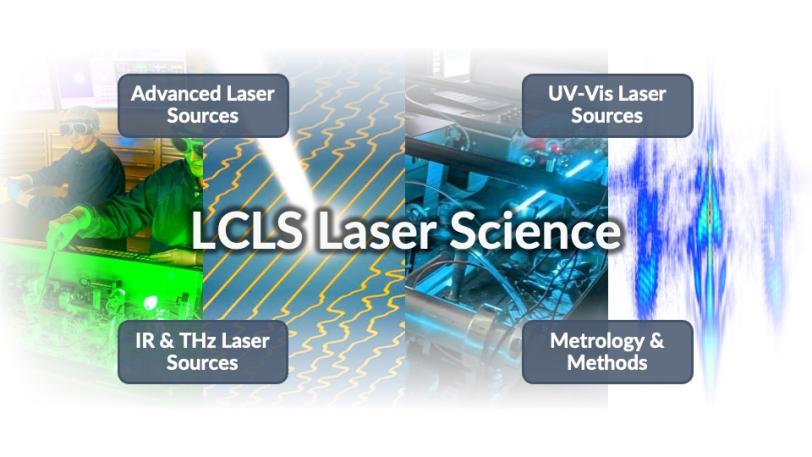
Overview graphic for laser science at LCLS

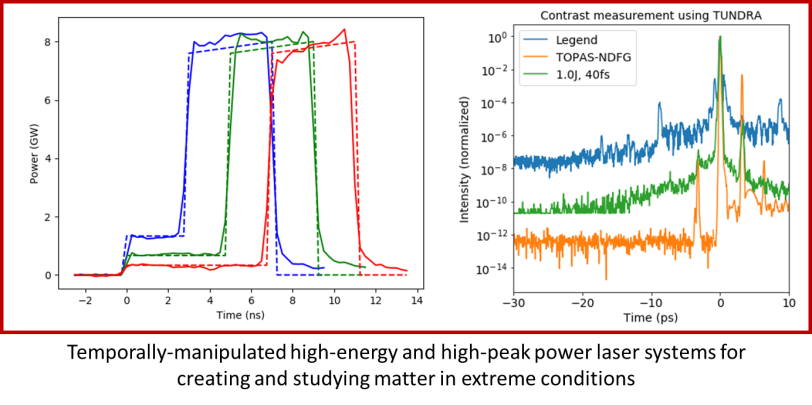
Research efforts and facility upgrades are driving continued improvement in high energy laser systems. This includes high power OPCPA/OPA and direct compression of fs and ps laser sources. Support is also directed to further development of the laser injector system for the FEL. Higher power laser systems has close coordinate with Matter in Extreme Conditions.

See MEC-U and OPCPA development for information on a couple of specific projects.

The Advanced Laser Sources group leads the scientific development of drive laser sources across LCLS. This includes support of the operation of these sources, exploration of new approaches and techniques for drive laser sources, and coordination with the MEC department to support high-energy and high-intensity laser capabilities. The group maintains a strong connection with the Laser Engineering department, who support the day-to-day operation and maintenance of systems in addition to supporting projects to implement new developments.

The following are highlights of the scope covered by the Advanced Laser Sources group:

  • high-power laser systems including OPCPA and pulse compression of 1um laser sources
  • conventional Ti:Sapphire systems and the MEC glass laser system
  • future MEC-U Petawatt and kJ laser systems
  • accelerator laser systems and XFEL laser science
LAS Image

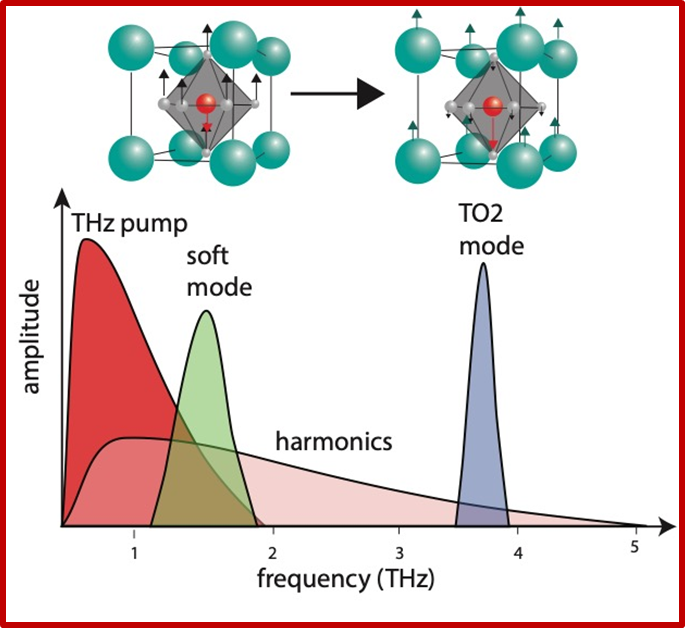
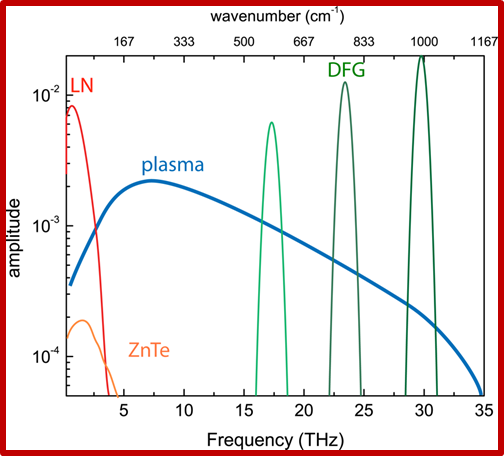
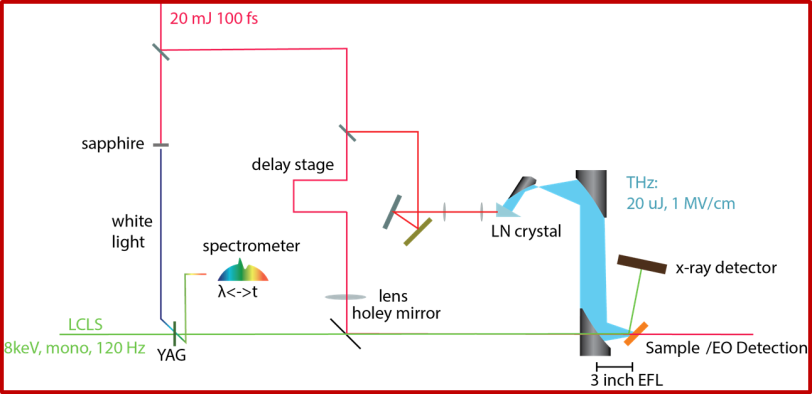
The THz frequency range spans the gap between microwaves and the infrared part of the electromagnetic spectrum. At LCLS we use laser-based methods to generat strong THz and mid-IR sources to control properties of complex materials on a sub-picosecond time scale. One area of focus is the development of a tabletop THz source using difference frequency generation, optical rectification and various other techniques. Techniques for the application of these THz and mid-IR sources in experiments are ongoing.

Coordination with the MAT Dept helps drive the research interests for mid-IR and THz sources and applications. 

The Infrared and Terahertz Sources group leads the development of strong-field THz and far-infrared laser sources. This includes integration and support of these sources in LCLS and UED user experiments and coordination with other Materials Science department and in-house science program on manipulation of matter with THz fields.

The following are highlights of the scope covered by the Ultrafast UV-Vis Sources group:

  • THz and IR sources for LCLS science
  • in-house science program using new sources to enable early science at LCLS-II
  • ASC THz lab as space for collaborative efforts, available to both internal and external users
LAS Image
LAS Image
LAS Image

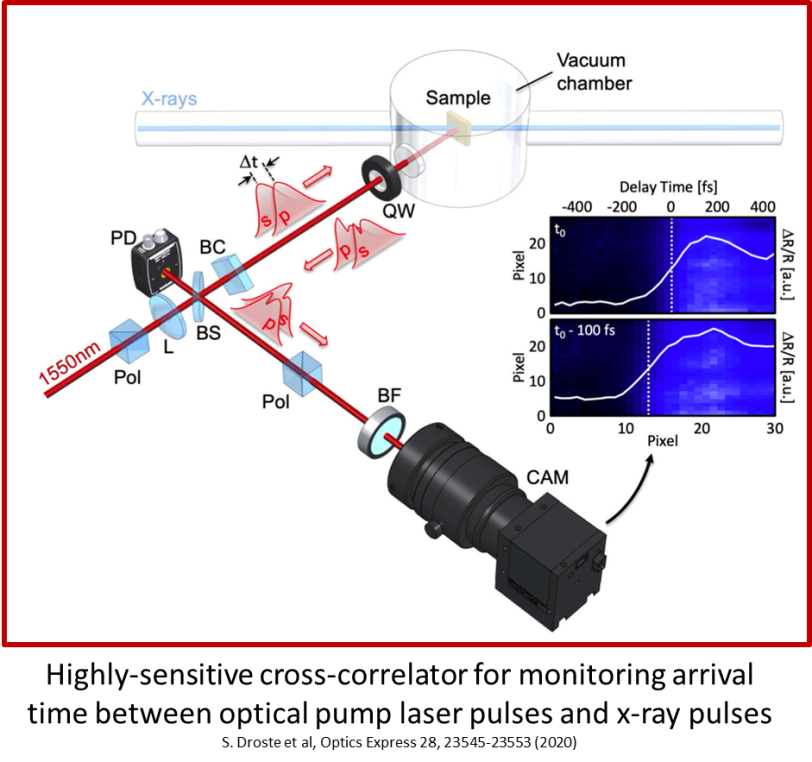
Current research focuses on developing and refining various techniques for temporal, spectral, spatial, etc. pulse characterization. Research is also focused on methods for temporal and spatial overlap of laser pulses with x-rays. Incorporating long-pulse laser sources, such as YAGs and OPOs, are undergoing development.

Coordination on science needs with the Bio Dept. is ongoing to further refine research interests.

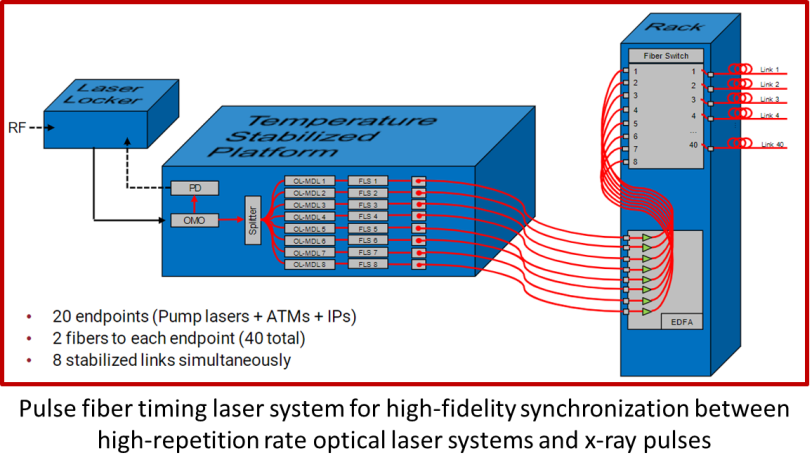
The Ultrafast Metrology & Methods group leads the development of techniques to characterize key optical laser and laser timing performance parameters. This includes driving developments to improve integration of laser sources and measurement techniques in LCLS beamlines and ensuring these are consistent with the science mission. This also includes support of mobile laser systems, such as the nanosecond lasers typically used in Bio experiments.

The following are highlights of the scope covered by the Ultrafast UV-Vis Sources group:

  • deployment of engineered laser sources at LCLS
  • scientific timing developments for LCLS experiments
  • laser characterisation and control
LAS Image
LAS Image

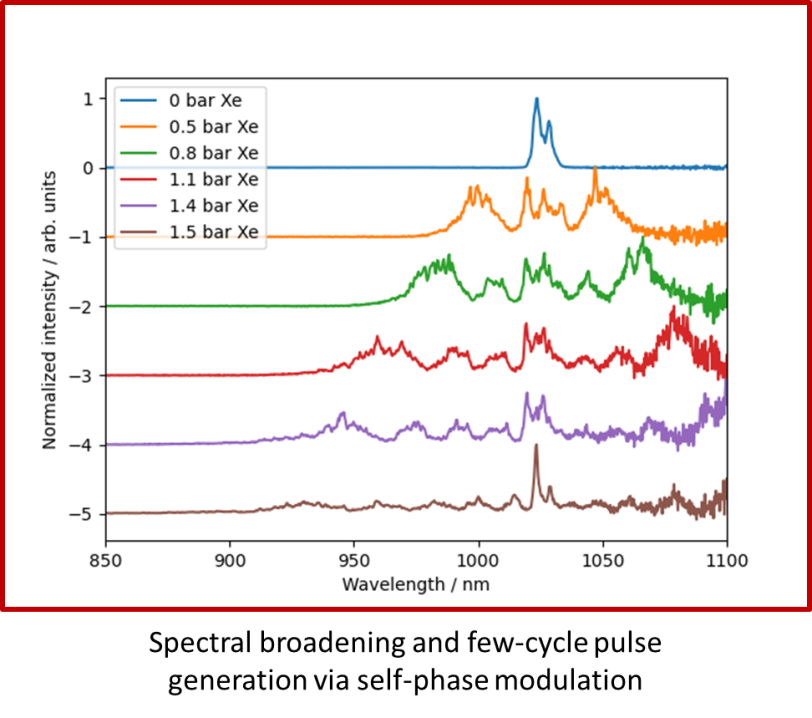
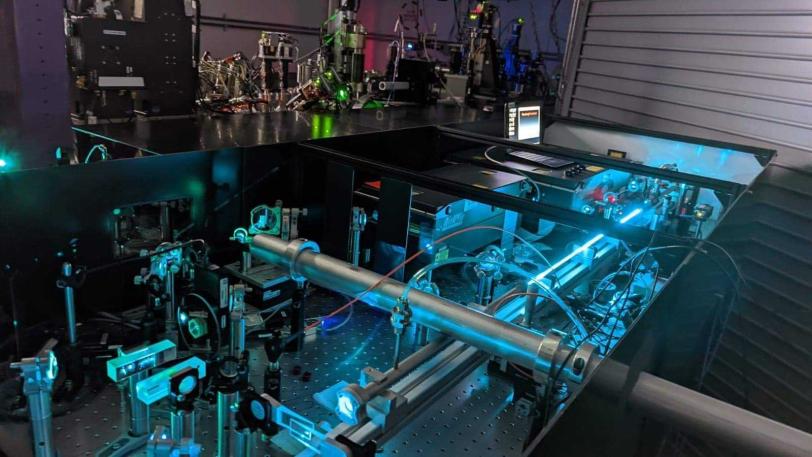
This work focuses on the generation of ultrafast (few cycle) pulses in the ultraviolet and visible regions using nonlinear processes. These processes include harmonic generation (HG), optical parametric amplification (OPA), four-wave mixing, resonant dispersive wave emission, etc.

This research is in close coordination with the AMO Dept. and Chem Dept.

The Ultrafast UV-Vis Sources group leads the development of ultrafast secondary sources in the UV-visible spectral range. This includes support of the implementation of these sources in experiments and coordination with other science departments, AMOS and Chemical Sciences in particular, to understand and respond to future needs, with a goal of fully exploiting UV and visible laser sources in LCLS experiments.

The following are highlights of the scope covered by the Ultrafast UV-Vis Sources group:

  • conventional crystal based harmonic generation, OPA + mixing techniques
  • spectral broadening & pulse compression
  • novel approaches to UV-vis generation for high average power application
LAS Image
LAS Image
LCLS | Linac Coherent Light Source
2575 Sand Hill Road MS103
Menlo Park, CA 94025
  • Facebook
  • Twitter
  • Instagram
  • Flickr
  • Youtube
  • LinkedIn
  • Staff portal
  • Privacy policy
  • Accessibility
  • Vulnerability disclosure
SLAC
  • SLAC home
  • Maps & directions
  • Emergency info
  • Careers

© 2026 SLAC National Accelerator Laboratory is operated by Stanford University for the U.S. Department of Energy Office of Science.

Stanford University U.S. Department of Energy
Top Top
Back to top Back to top